What are eye glasses, exactly?
Eye glasses are a frame and two lenses, made to your prescription and fitted to your face. Each part does its own job, and a pair only works well when both are right.
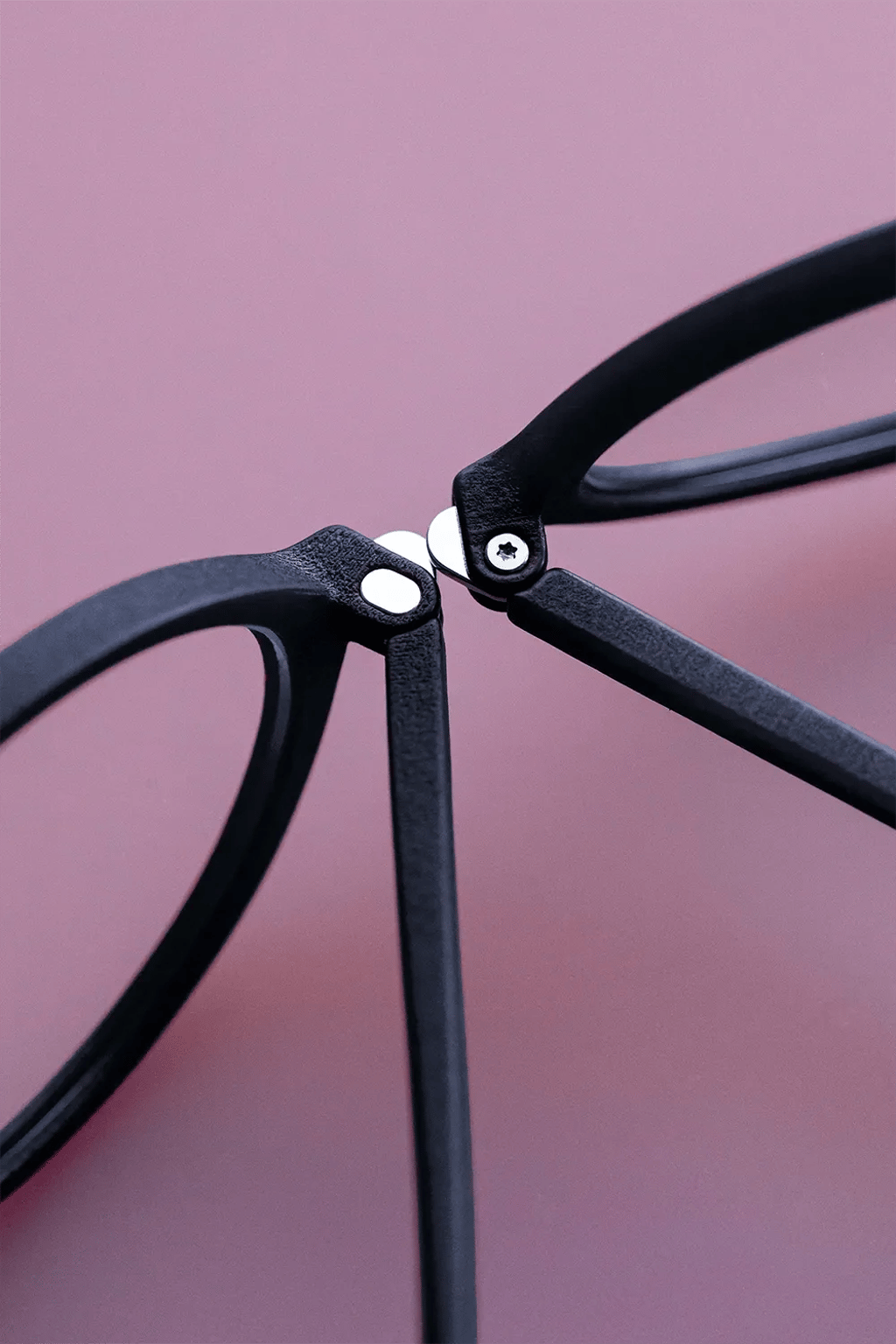
The frame holds the lenses in the correct position. Acetate and metal are the usual materials, and titanium is popular for being very light. Each feels different on the nose and behind the ears, so comfort is worth testing before you commit.
The lenses carry your prescription. Most modern lenses are made from optical plastics rather than glass. A strong prescription can make standard lenses thick and heavy, so a high-index material is often used to keep them thinner. A coating matters too. Anti-reflective coating cuts glare and reflections, which helps with night driving and screens.
Fit is what ties it together. Your prescription is centred on your pupils. An optician measures the distance between them, and the height of your eyes within the frame, so the lens sits in line with your vision. If it sits off-centre, you can get blur or tired eyes, even with a correct script.
Frames that slide down the nose or sit crooked shift the lenses too. Small adjustments to the nose pads and arms keep everything where it should be.
That is why a good pair is more than a frame and a script. At August Eyewear we fit lenses to your prescription, adjust every frame to your face, and include follow-up adjustments.
Optician or optometrist: who does what?
An optometrist tests your eyes and writes your prescription. An optician fits and makes your glasses from that prescription. They are different jobs, and most people need both.
The optometrist is a university-trained eye-health professional. They check how well you see, look for signs of eye disease and write the script. If your vision has changed, or you have not had an eye exam in a while, start here.
The optician takes it from there. In Australia you will often hear the role called an optical dispenser. They help you choose a frame, measure your face and eyes, order the lenses and adjust the finished pair so it sits properly. They don't test eyes or write prescriptions.
Here is the part many people don't know: you are never obliged to buy your frames from your optometrist. Your prescription belongs to you. Ask for a copy and take it to whichever optician you like, whether that is the clinic next door, a chain or an independent shop.
That matters because frame choice varies widely. Some practices stock a small range, while others focus on frames you won't find elsewhere. Taking your script elsewhere costs you nothing, and it lets you pick the shop, the range and the fitting you actually want.
A simple order of events:
- Book an eye exam with your optometrist.
- Ask for your prescription and keep a copy.
- Take your time choosing frames with an optician.
- Have the lenses fitted and the frame adjusted to your face.
Where to buy eye glasses in Perth
Perth has plenty of places to buy eye glasses, from national retail chains to small independent opticians. They differ in range, in who helps you, and in how much time you get.
National retailers sit in most shopping centres. They suit you if you want something quick and familiar, though the frames are often the same ones you will see in the next store.
Independent opticians usually stock fewer pairs, chosen by the people who run the shop. You tend to get more personal attention, and frames from makers you may not have heard of.
Whichever you choose, your prescription belongs to you. After an eye test, you can take it to any optician. You are never obliged to buy frames from the practice that tested your eyes.
Where August Eyewear fits
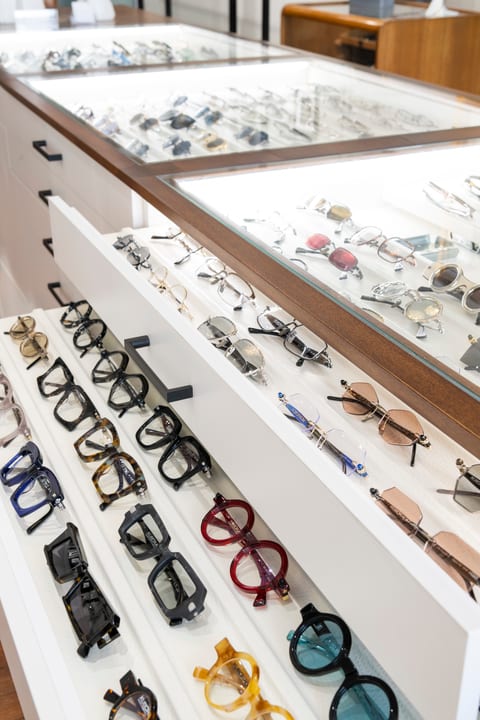
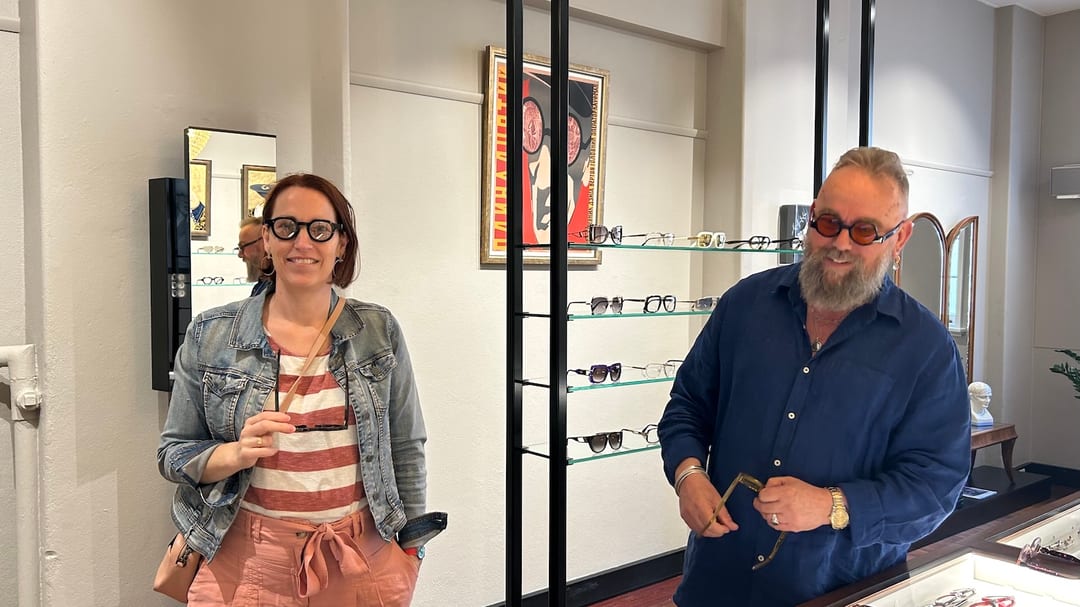
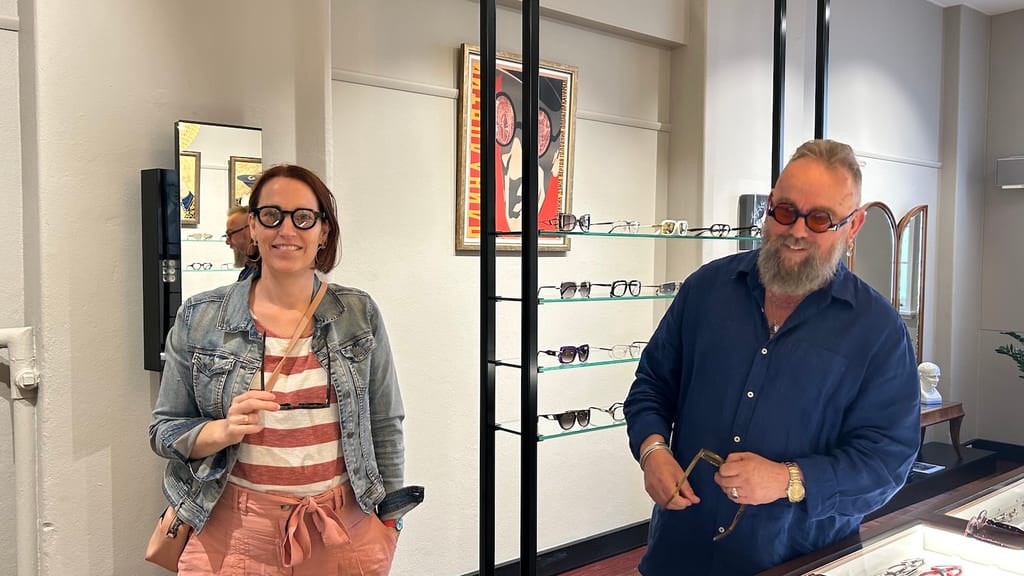
August Eyewear is an independent optician on Level 1 at 66 King Street, Perth CBD. Owner Charles Martin has over 40 years in eyewear and handpicks every frame at international eyewear shows, so the range keeps changing. It includes Kuboraum, Cazal, Thom Browne, Factory900 and Blake Kuwahara.
We don't test eyes. See your optometrist first, then bring your prescription to us. We fit the lenses to your script, adjust the frame to your face, and include follow-up adjustments whenever your glasses need a tweak.